Introduction
In the world of Portable Power Stations, one term has dominated the conversation for the last few years: “LiFePO4” (Lithium Iron Phosphate). It earned its reputation for being safer and longer-lasting than older lithium technologies.
But technology moves fast. As we look towards 2025, a superior technology is emerging, adopted by cutting-edge EVs and high-performance devices: the Semi-Solid State Battery.
Why are industry experts calling this the future? Is it really better than the current market standard? In this article, we compare JD Power’s advanced Semi-Solid State Battery technology against standard LiFePO4. We’ll break down the three critical differences—Weight, Weather, and Safety—that specs sheets often hide.
Round 1: Weight & Size (Energy Density Revolution)
The Current Standard (LiFePO4): The biggest downside of LiFePO4 is its low energy density. To get a high capacity (like 2000Wh), you need a lot of physical battery cells. This makes the units bulky and heavy. Many 2000Wh units weigh over 50-60 lbs (22-27kg), making them “portable” in name only.
The Next Gen (Semi-Solid State): JD Power’s Semi-Solid State Battery boasts a significantly higher energy density (over 260Wh/kg). What does this mean for you? You get the same massive 2000Wh capacity but in a device that is approx. 30% smaller and significantly lighter. The JD Power E2000 is designed to be truly portable, allowing you to carry massive power further into the wild without breaking your back.
Round 2: Winter Performance (The “Coldgate” Problem)
The Current Standard (LiFePO4): Standard lithium batteries hate the cold. The liquid electrolyte inside becomes sluggish. Most LiFePO4 power stations have a BMS (Battery Management System) that completely blocks charging when temperatures hit freezing (32°F / 0°C) to prevent damage. If you are winter camping, your solar panels become useless.
The Next Gen (Semi-Solid State): The gel-like electrolyte in our Semi-Solid State Battery maintains better ion conductivity in low temperatures. This allows the JD Power E2000 to operate reliably and discharge power in temperatures as low as -4°F (-20°C). It offers far superior resistance to cold weather performance drops, making it the only reliable choice for winter sports, snowy expeditions, or emergency backup during blizzards.
Round 3: Safety Structure (Beyond “Fire-Resistant”)
The Current Standard (LiFePO4): While safer than old-school NMC batteries, LiFePO4 still relies on a liquid electrolyte. In a severe crash or puncture scenario, there is still a risk of leakage, which can lead to shorts and potential thermal events.
The Next Gen (Semi-Solid State): JD Power’s Semi-Solid State technology minimizes liquid components, replacing them with a stable, semi-solid gel. This structure drastically reduces the risk of leakage. In rigorous nail-penetration tests, semi-solid batteries demonstrate superior thermal stability, refusing to catch fire or explode. When you are sleeping next to your power station in a van or tent, this structural safety provides the ultimate peace of mind.
Conclusion: Choose the Technology of the Future
LiFePO4 is a good technology, but it has reached its limits. If you demand a Portable Power Station that is lighter to carry, works in the freezing cold, and offers structural safety, the choice is clear.
The JD Power E2000 isn’t just a battery; it’s a leap forward. Experience the Semi-Solid State advantage on your next adventure.
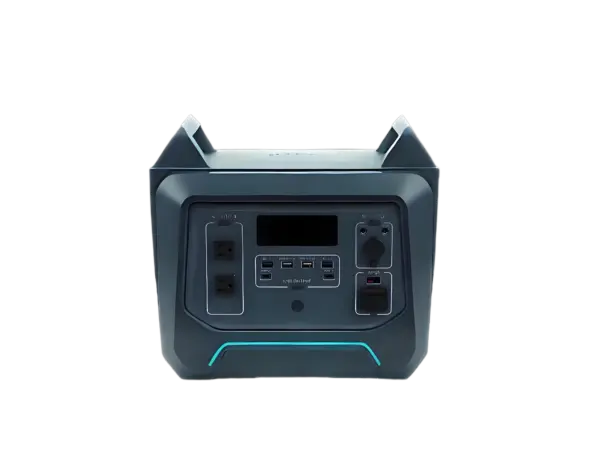
Industry’s first portable power supply with Semi-Solid State battery 2044Wh high capacity E2000
Revolution Unleashed – Semi-Solid State Energy for Extreme Adventures
Experience the future with groundbreaking Semi-Solid State battery technology:
✓ Zero Fire Risk: No liquid electrolyte = 100% explosion-proof (UN38.3 certified)
✓ -20°C Arctic Proof: Outperforms lithium-ion in freezing conditions
✓ 5X Faster Charge: 0-80% in just 1.17 hours(industry record)
✓ 20-Year Lifespan: 2,000+ cycles with <10% degradation